
Hardly An Empty Nest
So, we’re now in the breeding season, right? Well . . . in general, yes.
However, like so many things in the natural world, the full answer isn’t that simple. Avian nesting season varies greatly from species to species and depends on factors like the size of the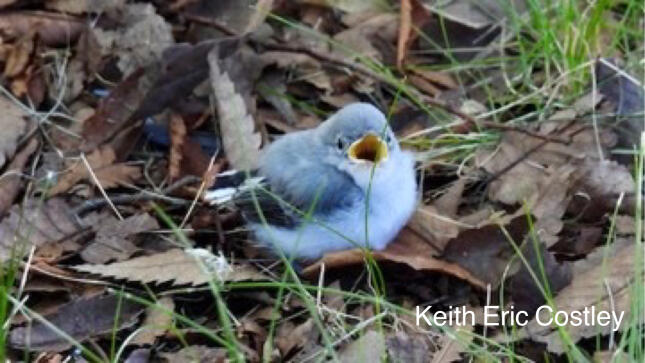 bird, whether it migrates (and how far), weather conditions, and food abundance.
As you’ve undoubtedly noticed with the increased volume of bird song in recent weeks, for the majority of our passerines (smaller, perching birds), nesting starts in late May or early June and runs through July or early August. It is almost immediately followed by the annual molt in late summer, which prepares birds for fall migration with a fresh set of feathers. Although there are exceptions, species that migrate long distances (to Central or even South America) tend to raise only one brood of 3-5 youngsters per year; this includes most flycatchers, swallows, orioles, warblers, and tanagers.
Non-migratory species that are resident year-round don’t need to devote energy to long-distance travel; thus, they begin nesting earlier in the spring (some already in late March, should weather and food availability permit) and go late into the summer or even early fall. This enables them to raise two or even three broods annually. Such species include most of our woodpeckers, crows and jays, chickadees, titmice, Carolina Wrens, Northern Cardinals, and our beloved Eastern Bluebirds, which, thanks to nest boxes, milder winters, and the proliferation of feeding stations that offer suet, mealworms, or shelled seeds, no longer leave our area each winter.
Doves begin breeding earlier than any other backyard species. Mourning Doves, which feed their youngsters a nutrient-rich regurgitated crop milk, raise at least three and sometimes as many as five broods per year. It is not unusual to encounter young doves already in March or as late as September. Domestic pigeons are even more prolific and have been known to breed any time of the year.
At the other end of the spectrum are the American Goldfinch and the Cedar Waxwing—two species that usually don’t begin nesting until the calendar actually says “Summer.” Goldfinches are one of the only songbirds whose young can digest seeds from day one. Thus, they delay nesting until July, when many wildflowers are beyond peak bloom and beginning to go to seed. An additional benefit of breeding later--many of the composite flowers on which they dine also produce late-summer silk or “down,” which finches use to line and soften their nests. Similarly, waxwings, which rely mostly on a fruit-based diet, wait until mid-summer, so there’s sure to be an abundance of ripe berries to provide food for hungry fledglings.
All of the rules change for our larger birds, almost all of which raise just a single brood - and usually a small one (just 2-3 young) at that. It takes much more time (often several months, as opposed to several weeks) to raise a nest full of young herons or hawks or geese than it does a brood of robins. Many of our largest predators (Bald Eagles, Great Horned Owls, Common Ravens) begin nesting prior to the end of winter, as it’s much easier to find prey before the trees leaf out; furthermore, their lengthy reproductive cycle means that dependent youngsters will still be demanding food into late sprin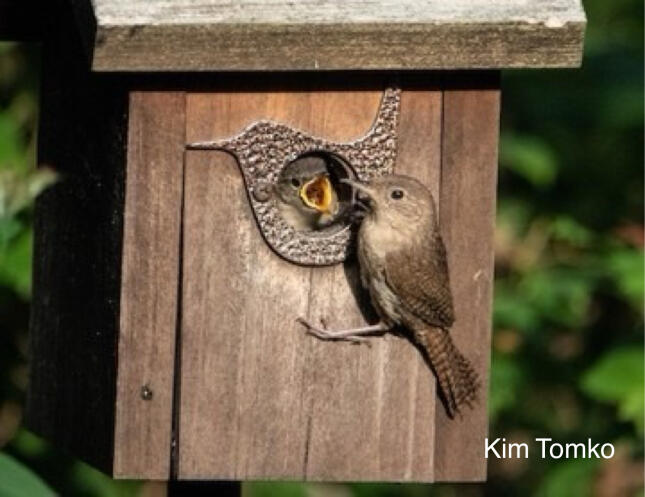 g or summer.
Waterfowl employ a different strategy and increase their chances of passing on genes to the next generation by having very large broods of 10-12 young or more. Unlike perching birds, ducklings, goslings, and cygnets are precocial, emerging from their eggs fully feathered, sighted, and ready to roam within hours. This is true for most ground-nesters, including quail, grouse, and shorebirds; if their nestlings were altricial (blind and featherless upon hatching), they’d immediately be snatched up by predators. Even though they are swimming and motoring around within a day or two, the majority of young ducks, geese, and swans still become predator food, so large broods are essential to having at least some breeding success.
Probably the shortest breeding season of all belongs to those shorebirds (plovers, sandpipers, dowitchers); it lasts all of five or six weeks. With a few exceptions, most of these nest on or near the arctic tundra, where days are long and invertebrate food is readily available (think mosquitoes and biting flies in Maine or Minnesota—then triple it!) However, immediately upon raising their young, they turn around and begin their long southbound journey to the other hemisphere; that migration itself can last longer than the time they are on their breeding grounds. The entire rearing process is so rushed that many shorebirds don’t even take the time to make a nest. They create a simple scrape on the ground and lay their eggs, which have evolved to look like pebbles or small stones, right there.
Wherever you find yourself this summer—at the beach, in the mountains, or in your own backyard - make time to look for signs of your feathered friends working through the nesting process. And, since we are now entering the season when you’re most likely to encounter families with awkward, fuzzy, demanding young birds, make a point of getting some baby pictures! This summer’s photo contest theme is “Hungry Mouths to Feed.” Snap a great shot of parent birds doing their best to keep those wide-open beaks filled and fledglings’ tummies content, and you could win a generous WBU gift card! The contest runs through August; ask for details in our Timonium or Columbia stores.
- Brian Rollfinke, Director of Education and Outreach