
10 Tips for Winter Birding
 The arrival of colder weather got you down? Planning fewer outdoor excursions over the next couple of months? On the contrary, winter can be a fantastic time to go birding! One must just temper expectations a bit, do a little homework, and follow these tips for many rewarding encounters with our hardier feathered friends:
1. PLAN AHEAD. While Maryland isn't known for brutal winters, they’re cold enough to make winter outings unpleasant for the unprepared. Always wear one layer more than you think you’ll need—and keep an extra one stashed in the car, just in case. Take advantage of occasional warm spells; the birds will be more active then anyway, as they tend to conserve energy when it’s cold. While activity throughout the day varies less in winter than during other months, you’ll still generally find more birds out and about until noon or 1:00 pm, then another brief flurry of foraging activity before dusk.
2. LIVE ON THE EDGE. Cold weather aside, finding birds in the winter can be difficult. Only around 100 species winter in the Mid-Atlantic (as opposed to over 200, which breed here), and they are relatively quiet this time of year, which means your Merlin app won’t be much help. Birding deep in the forest can be futile in winter, and you’ll find almost no birds in the middle of a large field. Ecotones (transition areas between two different types of habitats, such as forest/suburbia or field/wetland) are where it’s at, as they provide the greatest variety of food resources and microhabitats. One of the richest “edges” to explore is roadsides, right after a snowfall has been plowed—or scattered open patches where snow has melted—leaving exposed ground where seeds and insects may be found.
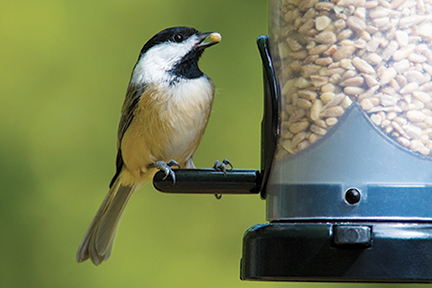
3. HANG WITH THE FLOCK. Winter conditions pose many challenges for our avian counterparts, and they rely on each other to survive during tough times. Finding sufficient food and staying safe from predators is easier when winter birds congregate. Food sources (patches of seed-packed wildflowers, berry-covered shrubs or vines) are also more concentrated in winter than when insects are flying all around. This means that when you encounter a bird, there are likely others nearby. Linger when you find a winter flock to make sure you’ve seen ‘em all. Parids (chickadees and titmice), in particular, are the vocal leaders of many a mixed-species group; other birds often follow them, knowing they’ll sound the alarm should conditions be unsafe. Some species (vultures, crows, blackbirds) cope with cold winter nights by roosting in close quarters in tremendous numbers. Track where they’re heading in the late afternoon, and you may be astonished—and, in the case of blackbirds, you may discover three or four species within one large roost.
4. THINK FAST FOOD. To power their high metabolism, birds need to consume a ton of calories in the winter! Wherever there are reliable food sources, there will be hungry birds. Find a nice patch of berries, and you’re likely to see thrushes (Hermit, Eastern Bluebird, robin) and/or Cedar Waxwings devouring them. Large seed heads from composite flowers (especially sunflowers) bring in droves of finches. Acorn-laden oak trees draw Blue Jays and woodpeckers. Bayberries (a.k.a. wax myrtle) are the primary winter food of “Butter-Butts” (Yellow-rumped Warblers). An abundance of pine/spruce cones provides the perfect place to look for Red-breasted Nuthatches, an “irruptive” species that comes down from Canada in huge numbers every few winters, when the northern conifer crop is poor. (This is one of those years!)
5. SUNSHINE ON YOUR SHOULDERS. After enduring a long, frigid night, birds do whatever they can to warm up quickly after sunrise. The best winter birding is often found on crisp, sunny mornings. Explore south- and southeast-facing tree lines and hedgerows, with the sun at your back. You’ll be facing sunlit patches where birds will be basking and foraging, and you’ll have better views that won’t be backlit.
6. TAKE COVER. If you find yourself birding on cloudy or windy days, keep in mind that birds will be less conspicuous, often hunkered down to remain less exposed. Ground feeders (cardinals, towhees, sparrows), in particular, seek the warmth and safety of dense shrubs and thickets, but they can easily be drawn out with a few scolding “PISH” calls. The adorably tiny Winter Wren spends much of its time in brush piles; don’t walk by one without checking!
7. KNOCK ON WOOD. Winter is the best time for spectacular views (and photographs) of woodpeckers. With no leaf cover, they are far more visible (but so are you, so move slowly to sneak up on them!) and they can be heard from greater distances. Furthermore, we have an additional species this time of year, as the brilliantly marked Yellow-bellied Sapsucker joins our six residents during the colder months.
8. FOLLOW THE MOB. Winter also provides the rare opportunity to encounter an owl—or at least get a great look at a diurnal raptor, like the Cooper’s or Red-shouldered Hawk. Crows and jays noisily mob these avian predators when they find one; once leaves drop, raptors are easier to discover. If you hear a ruckus from these brash Corvids, follow it to see who they are harassing. Many a breathtaking Great Horned or Barred Owl photo was acquired by pursuing agitated crows!
9. FOWL [sic] PLAY. Winter is hands-down the very best time of year to search for waterfowl, and Maryland is the place to do so. At least one-third of the ducks, geese, and swans along the Atlantic seaboard spend their winter on or near the Chesapeake Bay (Bay Journal, December 2023). As opposed to the five or six species that summer with us, nearly 30 species of waterfowl (plus several grebes and loons) are common in local waterways during the winter months. As temperatures plunge and shallow bodies of freshwater freeze over, these hardy swimmers congregate in whatever open waters they can find; in many cases, they move to the brackish waters of the Bay, which are less likely to ice up.
10. FOLLOW OTHERS’ LEAD. Because the distribution of winter birds is patchy and they tend to congregate where the eating is good, one can easily benefit from others’ discoveries. Rather than hope to encounter new species on your own, tap into the wealth of information on eBird to see what/where local birders are finding, then check out these places on your own. Even if you miss a particular target bird, you’ll learn about new birding hotspots worth revisiting.
Sure, winter birding outings can be bleak, frigid, and frustratingly slow at times; they can also provide rare encounters, stunning views, and lifelong memories. With fewer species in our area, winter is a great time to focus on our handful of resident birds and truly get to know them well, without being distracted by a parade of less common migrant species. Feeding tendencies, flocking behaviors, and interspecies interactions are all easier to notice when foliage isn’t in the way, and conditions are ideal for studying and deeply observing birds. And if listing is more your thing, extreme winter weather can also provide unique opportunities to view infrequent avian visitors from northern climes.
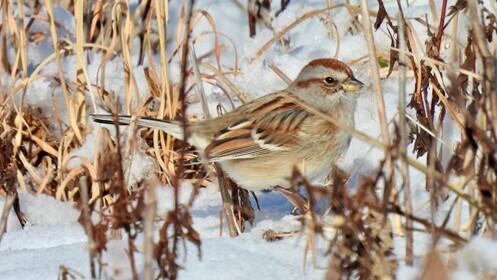
Photo Credit: American Tree Sparrow by Keith Eric Costley (Baltimore County, January 2025)