
GO NUTS for Birds This Fall!
 Although it isn’t explicitly stated, the story of Henny Penny (a.k.a. Chicken Little, depending on which version of the folktale one is reading) must be set in the Fall. Come October, there are indeed days when it seems that “the sky is falling.” Not only can strong autumn winds bring down leaves by the bushel, but for those of us living in or near the eastern deciduous forest, Fall is also when a huge variety of nuts . . . well, . . . they fall. (Note: Many a local birder has learned the hard way to be wary of walking under black walnut trees this time of year!)
Not surprisingly, many of our native birds have adapted to take advantage of this seasonal abundance of hard mast. Whether they be acorns, walnuts, beech nuts, hazelnuts, hickory nuts, or pecans, nuts are a calorie-dense, high-protein food source (with fat content in excess of 50%) that helps many avian species prepare for and sustain through the coming winter. Full of healthy essential fats and loaded with vitamins and minerals, nuts not only provide the nutrition birds need for healthy feather growth during the fall molting season, but they also provide the high-energy fats birds need to stay warm during the months when nighttime temperatures can be frigid and foraging for other food resources (insects, berries, herbaceous seeds) can be relatively futile.
Woodpeckers, jays, crows, nuthatches, and Parids (chickadees and titmice) are best known for their high-nut diets, although other species, including robins, grackles, wrens, and towhees, are opportunistic feeders that will gladly enjoy smaller pieces of hard-shelled mast when they’re available. Several species, most notably our Blue Jay and the western Acorn Woodpecker, are famous for gathering far more than they can eat and caching extra nuts, storing them for the hard times to come when fresh food will be scarce. Of course, most of our resident mammals—especially squirrels, chipmunks, deer, and bears—are fond of nuts, as well. Wild Turkeys are, too. Woodpeckers are able to protect their stash from these potential plunderers by wedging them tightly into crevices in trunks and large branches so that animals lacking their chisel-type beak cannot remove them. Blue Jays, which hide most of their cache in the ground, are so clever that they’ve been known to “fake bury” nuts if they suspect they’re being watched by squirrels or other birds and, in fact, fly away with their beak and crop still full for hiding elsewhere! Jays, incidentally, are widely appreciated as the number one way that new oak seedlings get established.
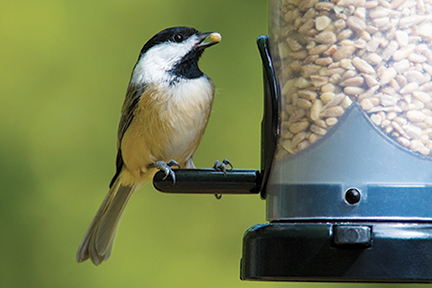
 You can help our feathered friends through harsh winter conditions by offering a variety of nuts at your feeding station. Although a legume, not a true nut, peanuts are the easiest way to do so; they are enormously popular with a wide variety of feeder visitors. Carolina Wrens and White-breasted Nuthatches feast on them. Almonds do not grow in our climate, but chopped into smaller pieces, they have just as broad an appeal at feeders; this is true of hazelnuts and pecans, as well. Whatever nuts you set out for the birds, make sure that they are raw (not roasted) and unsalted, as well as free of any oils, seasonings, or flavorings. Also check that they are not at all moldy, especially during moist weather or warm spells, when softer nuts out of the shell can spoil. Consider offering a nut-heavy seed mixture (perhaps our TreeNutty blend?) in a squirrel-proof feeder, or you may find most of it going to those furry-tailed bandits. And don’t forget bark butter; with its peanut-butter base, it is a favorite of smaller climbing birds, like nuthatches, Parids, wrens, and the adorable Brown Creeper.
As you’re enjoying watching your backyard visitors deshell, devour, and deceive one another as they cache the nuts you offer, don’t forget to snap a few photographs of the nuttiness. Our fall photo contest theme (“Those Nutty Birds!”) runs through December. Take a winning photo and you just might cache in . . . I mean, cash in with a generous gift card to our WBU stores!
Photos: Towhee - Brian Rollfinke, Red-Headed Woodpecker - Keith Eric Costley